
HTTP/HTTPS
What Is an HTTP/HTTPS Reverse Proxy?

What is it?
An HTTP/HTTPS reverse proxy is the server that sits in front of other web servers and forwards user requests to those web servers. Reverse proxy implementations are typically aimed at increasing scalability, security, and performance.
How does an HTTP reverse proxy work?
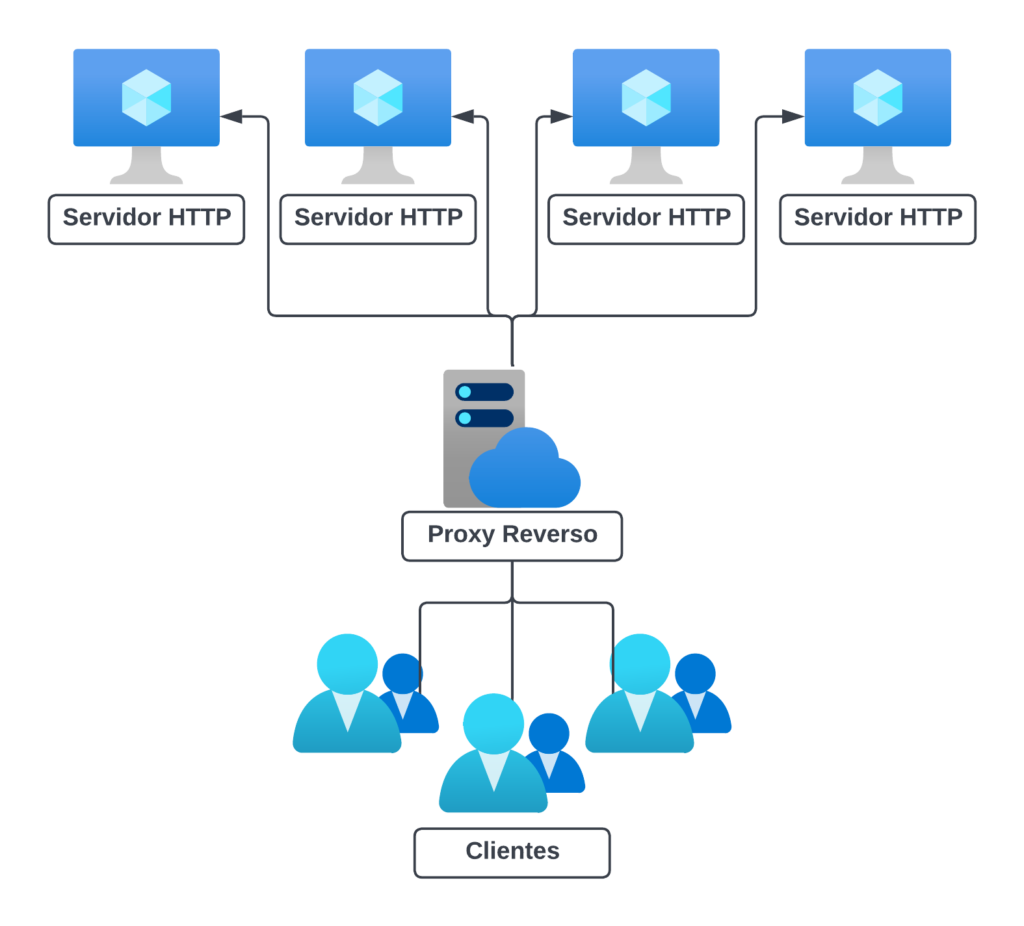
To help explain, let’s use an analogy with a restaurant host: they’re always positioned near the entrance, right? Guiding us to our chosen table or reservation. A reverse proxy works in a similar way with HTTP/HTTPS packets: when the request reaches it, the proxy service redirects the request to the server. In the diagram below you can see the request’s path:
What are the main advantages?
Let’s think about the following scenario: you have only 1 public IPv4 address and want to host several HTTP/HTTPS services with different domains, in a professional way, without using specific ports for each service, just 80 and 443. This is the main scenario where a reverse proxy is applied. This way, it’s possible to have multiple domains such as: ex1.acme.com being routed internally to http://172.23.26.43:80 and ex2.acme.com routed to https://172.23.26.78:3000, both with DNS pointing to the same public IPv4 address 123.43.12.158.
Besides the scenario above, which is the most common one, we also apply reverse proxy mainly in the following situations:
Load balancing: a reverse proxy can distribute a client’s requests across multiple servers, allowing traffic to be split evenly and avoiding overload on a single server;
Security: the reverse proxy can be configured to provide an additional layer of security, such as user authentication and data encryption; and
Hiding IP addresses: the reverse proxy can hide the final servers’ IP addresses, providing an additional layer of privacy and security
In summary…
… a reverse proxy is a valuable tool to ensure your websites and applications can handle high volumes of traffic and provide extra security for your users. It works by redirecting a client’s requests to another server, allowing traffic to be split evenly and offering additional features like authentication and content filtering.
If you’re considering implementing a reverse proxy in your infrastructure, it’s important to consider your traffic and security requirements to make sure you choose the right solution for your company.
To ensure a successful implementation, you can count on the ACT Tecnologia team, where our specialists will design a robust solution for your infrastructure. Get in touch with us!
Is your operation ready for this?
Talk to ACT and understand, with clarity, where your operation is exposed.
Talk to ACT